What is a cylinder - and why it's important to know the volume
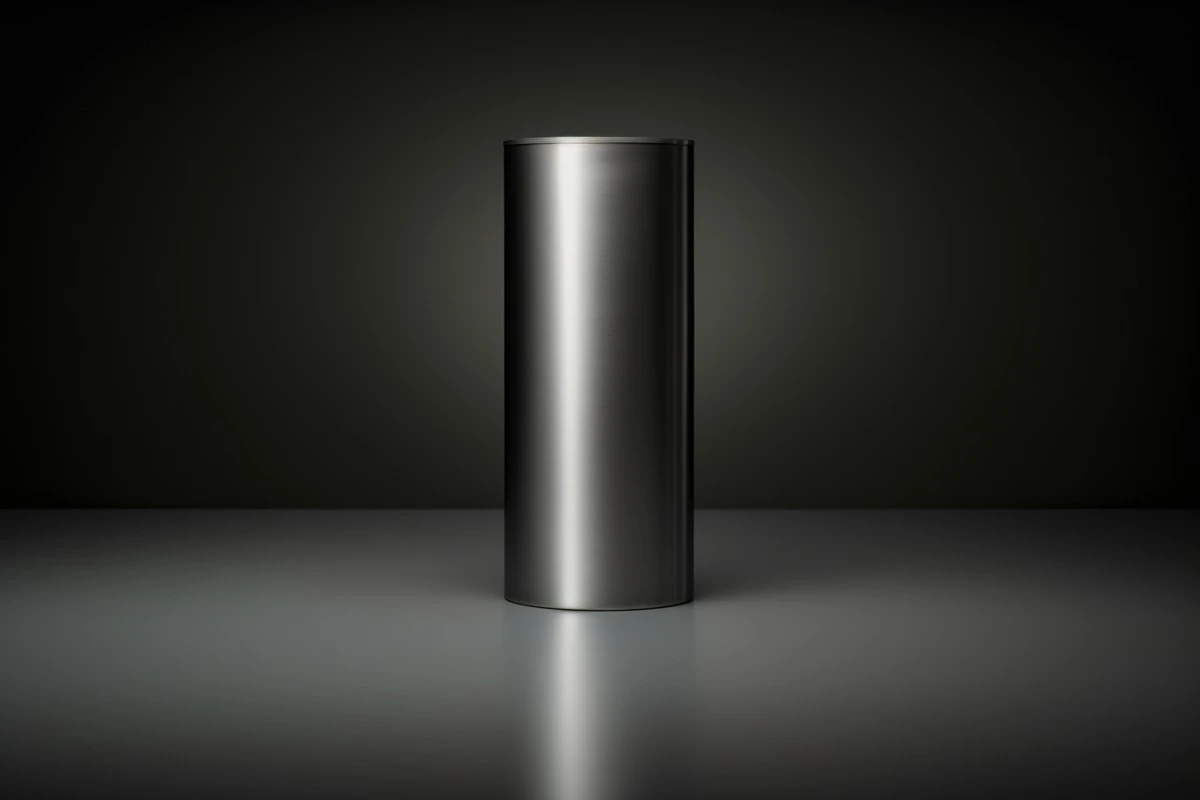
A cylinder is a three-dimensional shape with two circular faces connected by a curved surface. To calculate the volume, we need to know the cylinder's radius and height, which can then be used together with Pi (3.14) to calculate an accurate result.
Knowing the volume of a cylinder can be useful for a number of reasons and is in principle quite simple. Knowing how to calculate volume accurately allows you to calculate the volume of liquids or gases in cylindrical containers, as well as in building construction and other engineering projects to estimate the weight of an object based on volumetric size.
The formula for calculating the volume of a cylinder
To accurately calculate the volume of a cylinder, we use the formula V = πr²h, where "r" is the radius and "h" is the height of the cylinder in question. The result will be in cubic units, depending on the units used to define both variables. This formula makes it easy to find out how much space a cylinder takes up or how much material is needed for specific projects.
So the formula looks like this:
V = πr²h
How to calculate the volume of a cylinder
Now that we know what the formula looks like, let's take an example. Let's say we have a cylinder with a radius (r) of 5 in and a height (h) of 10 in:
We first multiply Pi (3.14) by the radius 5 squared (25) which gives 78.5. This number multiplied by 10 gives 785 cm³ which is the total volume of the cylinder. You can further multiply this volume by the specific gravity of wood, stone or water to find the weight that the cylinder contains. But remember, if you measure and calculate in centimeters and want your answer in liters, you must divide by 1000 since 1 liter is equal to 1000 in³.
For example, if you needed to calculate the volume of a cylindrical tank that measures 4 meters in radius and 10 feet in height, you could multiply 4² x Pi x 10 together to get a final answer of 502.4 cubic feet.
By following the formula written as V = πr2h (multiplication signs are hidden) you can quickly and easily calculate the volume of any cylinder, regardless of size or shape. It is important to remember that the measurements for both the radius and height of a cylinder must be in the same units to obtain an accurate calculation.
Overall, calculating the volume of a cylinder is an important skill to have and is easily done with the simple formula. Once you have taken the measurements of the radius and height of your cylinder, you can use a calculator to help you find the answer quickly and accurately.